Are 45 Records Worth Anything? What Most Sellers Should Know

Most 45 records — especially mass-produced pop hits — have little to no resale value. Many aren’t sellable at all as individual records.

But small-pressing regional soul, R&B, garage, and early rock singles can be a completely different story. Scarce local releases with real collector demand — especially in strong condition — are where meaningful value exists.

a 45rpm single on a turntable

Are 45 Records Worth Anything? Use This Fast Filter

If you're trying to quickly gauge whether your 45s have resale potential, look for these characteristics:

  • • Independent or regional label pressings (often 1960s–70s soul, R&B, funk)
  • • Garage rock, early punk, or private-label releases
  • • Artists who never had major national distribution
  • • Titles known in DJ or collector circles
  • • Clean vinyl with light wear and intact labels

If most of your box consists of major-label chart hits from the 60s–80s, expectations should stay realistic. But when small-label regional singles show up — especially in strong condition — that’s when deeper evaluation makes sense.

How the 45 Market Actually Works

The most valuable 45s are rarely the biggest hits. They’re often obscure regional singles that were pressed in small numbers and never widely distributed. Because supply was limited from the start — and many copies were played heavily — clean survivors are scarce today.

  • • Many were local releases sold only in one city or region
  • • Pressing runs were sometimes only a few hundred copies
  • • Artists often never recorded full albums
  • • Certain styles have dedicated global DJ followings
  • • Condition dramatically affects real-world resale demand

In short: value in the 45 market comes from scarcity, demand, and condition — not fame, not age, and not how many copies you own.

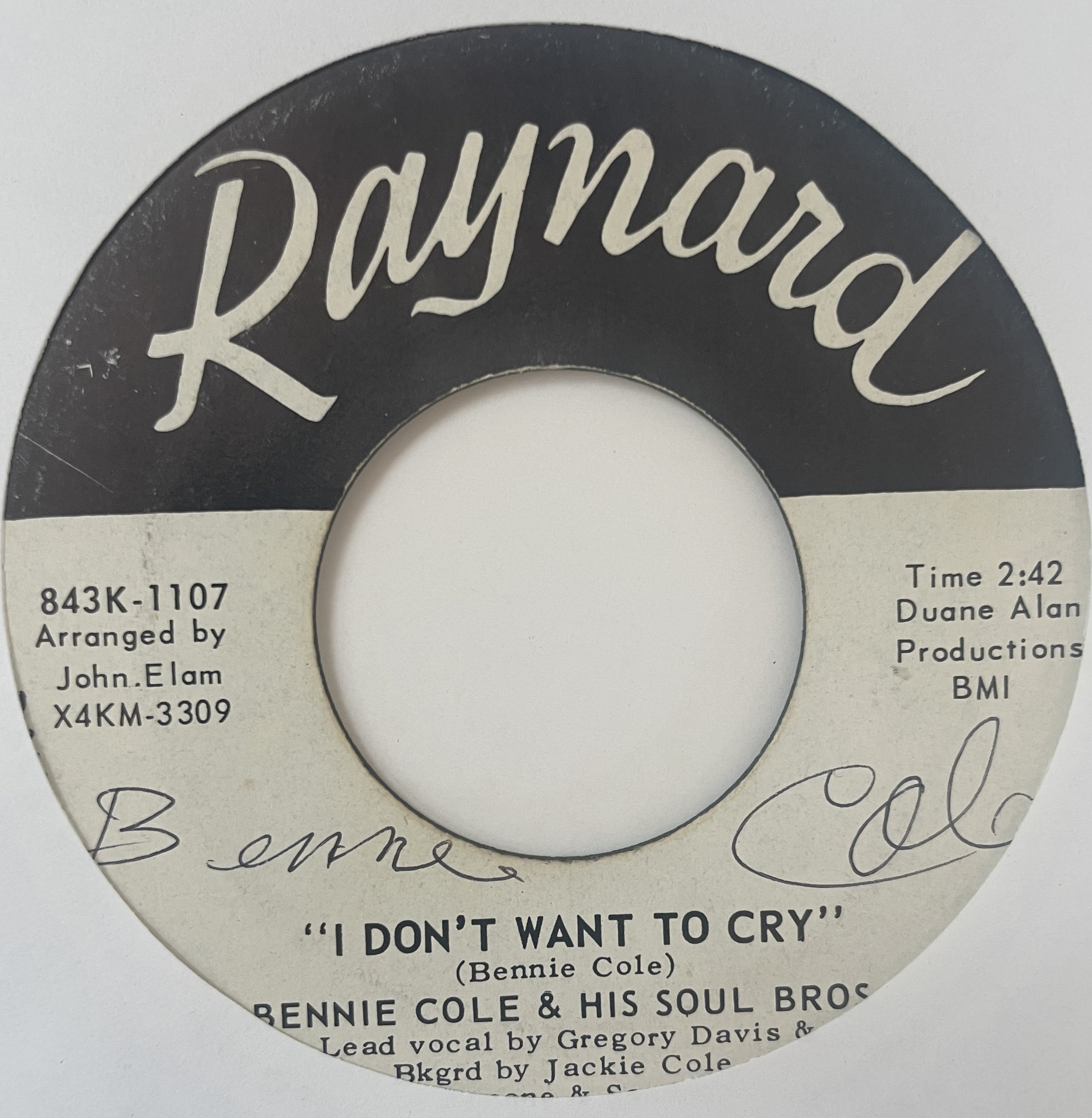
Bennie Cole 45

The Birth of the 45rpm Single

In 1949, RCA Victor introduced the 7-inch, 45rpm record as a direct challenge to Columbia’s 12-inch, 33⅓rpm LP. Each format had clear advantages: LPs offered longer playing time for albums, while 45s were cheaper to produce and ideal for singles. Their compact size, bright labels, and affordable price point helped 45s catch on quickly — especially with younger listeners.

Throughout the 1950s, jukeboxes filled with 45s became fixtures in diners, bars, and dance halls. For many people, spinning a 45 was their first experience truly owning music, and the format soon became inseparable from rock ’n’ roll’s explosive rise.

45s and Popular Music

By the 1960s, the 45 had become the lifeblood of popular music. Nearly every major hit — from Elvis Presley to The Beatles — was issued on 45. The format also fueled the growth of influential soul and R&B labels, along with countless regional imprints that pressed records in far smaller numbers than major releases.

DJs relied on 45s for dance floors, and collectors soon realized that some pressings — especially regional or limited runs — were far rarer than their album counterparts. Even in the punk and new wave era of the late ’70s and early ’80s, bands continued pressing 45s to get their music out quickly and cheaply. From Northern Soul dance floors to DIY punk clubs, the 45 carried entire musical movements.

Underground and Regional Pressings

While the major labels dominated the charts, thousands of smaller labels pressed 45s in tiny quantities. In the 1960s and 70s, local soul and funk groups often pressed just a few hundred copies to sell at shows or local shops. Punk and indie bands in the 70s and 80s followed the same model, releasing DIY singles that are now highly collectible. Because these pressings were never widely distributed, surviving copies are scarce — making them some of the most sought-after records in the world today.

Why 45s Are Collectible Today

Collectors prize 45s for their rarity and cultural significance. Unlike LPs, which were often repressed many times, 45s were frequently issued once and never again. Original labels, condition, and regional ties all affect value. A scratched common pop single might only be worth a dollar, but an obscure funk 45 in excellent shape could fetch hundreds or even thousands. For many collectors, 45s offer a chance to hold a unique piece of music history.

Have 45s? Get a Fast Milwaukee Offer.

Whether your 45s are soul, funk, garage, R&B, rock, or early rockabilly, We Buy Records Milwaukee gives quick, fair offers on singles and full collections. Same-day responses, free Milwaukee pickup for larger collections, and honest guidance from real collectors.

Milwaukee’s trusted buyer of LPs & 45s — open 7 days.

Read 5-Star Milwaukee Seller Reviews

45 on a home turntable

Selling 45s: What to Expect

If you’re thinking about selling your 45s, a few factors matter most: condition, rarity, and genre. Original sleeves and labels can boost value, but many high-dollar 45s are valuable even without packaging. While you can try selling online, listing and shipping individual records takes time and expertise. For most people, working with an experienced local buyer is the easiest way to get a fair, fast cash offer.

👉 Looking to sell your 45s in Milwaukee? Visit our We Buy 45s page to learn more and get started.

Most 45 collections are evaluated as a whole — not priced at individual retail listing values. Buyers make offers based on resale demand, condition, and how much of the collection is actually sellable. In many cases, a small percentage of high-demand singles carry the value, while common titles may have little or no resale market.

Frequently Asked Questions About 45 Records

Are old 45 records worth money?

Most 45s — especially major-label pop hits from the 1960s–80s — have little to no resale market. However, small-pressing regional soul, R&B, garage, and early punk singles can carry meaningful collector demand when condition and scarcity align.

Are 45s ever more valuable than LPs?

Value doesn’t depend on format — it depends on scarcity and demand. Many of the most valuable 45s were standalone regional singles by artists who never recorded full albums. When a pressing was small and collector interest remains strong, a 7-inch single can carry significant value regardless of whether an LP exists.

How can I tell if my 45 is rare?

Check the label, catalog number, genre, and overall condition. Independent or short-lived labels, lesser-known artists, and titles with DJ or collector followings tend to have stronger demand than mass-market chart hits.

Who buys 45 records near me?

Record buyers who specialize in full vinyl collections are typically the most efficient option. In Milwaukee and Southeast Wisconsin, We Buy Records reviews 45 collections regularly and can quickly determine whether a deeper evaluation makes sense.

So… Are 45 Records Worth Anything?

Most 45rpm singles have little to no resale market. A small percentage — typically scarce regional pressings in strong condition — carry real collector demand.

Value in the 45 world comes down to scarcity, demand, and condition — not age, not fame, and not how many copies you own. Understanding that difference saves time and keeps expectations realistic.

Interested in seeing the most valuable 12” singles ever sold? Click here!